Revista Internacional de Educación y Análisis Social Crítico Mañé, Ferrer & Swartz.
ISSN: 2990-0476
Vol. 4 Núm. 1 (2026)
Case study: family risk dynamics and vulnerability in a context of intrafamilial violence
Estudio de caso: dinámicas de riesgo
familiar y vulnerabilidad en un entorno de violencia intrafamiliar
Estudo de
caso: dinâmicas de risco familiar e vulnerabilidade em um contexto de violência
intrafamiliar
Miriam Yajaira Lavayen Delgado
Bachelor's degree in Social Work, Eloy Alfaro Lay University of Manabí, Ecuador. Master's degree in Psychology with a specialization in Psychosocial and Community Intervention, Salesian Polytechnic University, Ecuador. Doctoral candidate in Social Work, Rovira i Virgili University (Spain). Expert Social Worker for the Council of the Judiciary, Ecuador.
https://orcid.org/0000-0001-9103-3745
miriamyajaira.lavayen@estudiants.urv.cat
Angie Andreina Loor Benitez
Master's degree in Neuropsychology with a specialization in Neuropsychology of Learning, Casa Grande University, Ecuador.
Medical Expert for the Council of the Judiciary, Ecuador.
https://orcid.org/0009-0005-9405-4214
angie.loor@casagrande.edu.ec
Luis Alfredo Davalos Serrano
Expert Psychologist of the Council of the Judiciary, Ecuador.
https://orcid.org/0009-0006-3525-7676
ldavaloss@unemi.edu.ec
Abstract
This case study is
framed within professional Social Work intervention in contexts of high social
vulnerability. It analyzes the situation of a family with a history of domestic
violence and additional risk indicators, such as psychoactive substance use,
school dropout, lack of support networks, and sexual abuse, using an ecological
and rights-based approach. The objective is to understand the risk and
vulnerability dynamics present within the family system in order to guide
biopsychosocial intervention strategies. The study was conducted through a
review of the judicial case file, semi-structured interviews, construction of a
genogram, and narrative analysis, complemented by an assessment of risk levels
and social impact. The findings reveal a family structure characterized by
conflictive relationships, patterns of violence, economic precariousness, and
dynamics that increase children’s exposure to risk factors such as addictions,
involvement in criminal groups, and limited access to education. The study concludes
that there is a need to implement comprehensive biopsychosocial intervention
strategies, strengthen community support networks, and ensure institutional
follow-up to safeguard the protection and well-being of all family system
members.
Keywords: Social Work, domestic violence, social vulnerability, case
study, psychosocial intervention, gender-based violence, psychosocial risk.
Resumen
Este estudio de caso se enmarca en la intervención profesional desde el Trabajo Social en contextos de alta vulnerabilidad social, y analiza la situación de una familia con antecedentes de violencia intrafamiliar y otros factores indicadores como consumo de sustancias psicoactivas, abandono escolar, ausencia de redes de apoyo y abuso sexual, desde una perspectiva ecológica y basada en derechos. El objetivo es comprender las dinámicas de riesgo y vulnerabilidad presentes en el sistema familiar para orientar estrategias de intervención biopsicosocial. La investigación se desarrolló mediante revisión de expediente judicial, entrevistas semiestructuradas, elaboración de genograma y análisis narrativo, complementado con la evaluación de niveles de riesgo e impacto social. Los hallazgos evidencian una estructura familiar marcada por relaciones conflictivas, patrones de violencia, precariedad económica y dinámicas que incrementan la exposición de los hijos a factores de riesgo como adicciones, vinculación con grupos delictivos y limitaciones en el acceso a educación. Se concluye la necesidad de implementar estrategias integrales de intervención biopsicosocial, fortalecimiento de redes comunitarias y seguimiento institucional para garantizar la protección y bienestar de los miembros del sistema familiar.
Palabras clave: Trabajo Social, violencia intrafamiliar, vulnerabilidad social, estudio de caso, intervención psicosocial, violencia de género, riesgo psicosocial.
Resumo
Este estudo de caso insere-se na intervenção profissional do Serviço Social em contextos de alta vulnerabilidade social e analisa a situação de uma família com antecedentes de violência intrafamiliar e outros fatores indicativos, tais como o consumo de substâncias psicoativas, abandono escolar, ausência de redes de apoio e abuso sexual, a partir de uma perspectiva ecológica e baseada em direitos. O objetivo é compreender as dinâmicas de risco e vulnerabilidade presentes no sistema familiar, a fim de orientar estratégias de intervenção biopsicossocial. A pesquisa foi desenvolvida por meio da revisão do processo judicial, entrevistas semiestruturadas, elaboração de genograma e análise narrativa, complementadas pela avaliação dos níveis de risco e do impacto social. Os achados evidenciam uma estrutura familiar marcada por relações conflituosas, padrões de violência, precariedade econômica e dinâmicas que aumentam a exposição dos filhos a fatores de risco, como dependências, vinculação a grupos delinquentes e limitações no acesso à educação. Conclui-se pela necessidade de implementar estratégias integrais de intervenção biopsicossocial, fortalecimento das redes comunitárias e acompanhamento institucional, a fim de garantir a proteção e o bem-estar dos membros do sistema familiar.
Palavras-chave: Serviço Social, violência intrafamiliar, vulnerabilidade social, estudo de caso, intervenção psicossocial, violência de gênero, risco psicossocial.
Introduction
This case study is developed through a qualitative interpretive approach aimed at understanding the subjective experiences, family relationships, and power structures that shape domestic and family violence within contexts of high social vulnerability. Contemporary qualitative analysis maintains that social processes must be examined from the perspective of those being studied, through the narratives and practices individuals construct in their everyday lives, privileging their voices in order to capture the complexity of the phenomenon (Braun & Clarke, 2021; Green et al., 2025). This approach makes it possible to examine the events, relational dynamics, and structural conditions affecting the nuclear family, particularly in cases involving severe physical violence, psychological abuse, economic violence, parental abandonment, and socioeconomic precarity.
The case analyzed concerns a single-parent family currently living in southern Guayaquil, characterized by conditions of urban poverty, limited institutional presence, and pronounced community fragmentation. The family history reveals coexistence marked by episodes of violence (including physical violence), judicial complaints, suicide attempts, adolescent sexual abuse, psychoactive substance use, death threats, and the involvement of one of the children with organized criminal groups (OCGs). These circumstances are further aggravated by the absence of support networks, lack of stable housing, and the mother’s precarious employment situation, all of which intensify psychosocial risk and the vulnerability of children and adolescents.
To understand this problem, the study draws upon Bronfenbrenner’s bioecological approach to human development (1979), updated by Tong and An (2024), which argues that the well-being and behavior of children and adolescents can only be explained by considering the interaction among the systems in which they participate: family, school, community, support networks, and institutions. This framework is particularly relevant in territories such as southern Guayaquil, where structural inequality, community violence, and socioeconomic precariousness directly influence the reproduction of high-risk family dynamics (Espinoza & Alchundia, 2026).
The analysis also incorporates the critical perspective of Rita Segato (2016), who argues that violence against women and girls cannot be understood merely as a private matter, but rather as the manifestation of a patriarchal order that structures social life and reproduces hierarchies of power. Segato introduces concepts such as the “mandate of masculinity” and the “pedagogy of cruelty,” which make it possible to analyze how violent practices become embedded within cultural and symbolic systems that legitimize female subordination and male domination. This perspective broadens the analysis toward the structural and cultural dimensions that sustain family violence, recognizing that family relations are configured within a broader network of social, economic, and gender inequalities.
Recent scientific evidence confirms that continuous exposure to family violence generates severe emotional, cognitive, and social consequences for children and adolescents, including post-traumatic symptoms, difficulties in emotional regulation, social withdrawal, low self-esteem, and risk-taking behaviors (Hoppen et al., 2024; Latzman et al., 2019; Zhang et al., 2025). Significant repercussions have also been documented in the educational sphere, including poor academic performance, chronic absenteeism, and difficulties in social adaptation (Bârsan, 2024). These effects become even more severe when families lack support networks, present structural dysfunctions, or reproduce patterns of intergenerational violence (Gélinas et al., 2025).
From the perspective of Social Work, intervention with families affected by violence requires a comprehensive, interdisciplinary, and rights-based approach that articulates biopsychosocial, community, educational, and judicial resources (UNICEF, 2021a, b). A comprehensive analysis of risk factors, parenting practices, family tensions, and the neighborhood context in southern Guayaquil is therefore essential for grounding psychosocial intervention proposals aimed at ensuring the safety, well-being, and integral development of the adolescents involved.
Furthermore, this case is especially relevant to Social Work because it demonstrates that violence cannot be understood solely at the individual or family level, since violent dynamics are deeply conditioned by structural logics such as urban segregation, deficiencies in public services, and the territorial presence of criminal economies. Recent studies in Latin America indicate that family violence intensifies in contexts where economic inequality, distrust toward state institutions, and community fragility converge (Barros, 2025; UNDP et al., 2026). In this context, understanding the interactions between territorial conditions and family dynamics is fundamental for designing interventions that move beyond immediate responses and instead promote sustained long-term transformations.
Finally, the case invites reflection on the methodological and ethical challenges faced by Social Work when intervening with families exposed to severe violence, accumulated trauma, and multiple forms of risk. The need to preserve safety, avoid revictimization, and guarantee the participation of children and adolescents under conditions of dignity requires rigorous professional practice and a critical reading of existing protection systems. The literature emphasizes that case studies, when articulated with ecological and gender-based analyses, constitute powerful tools for understanding complex phenomena and generating situated knowledge capable of strengthening public policy and intervention practices (International Federation of Social Workers, 2020; Stake & Visse, 2022). In this way, the present study contributes to making visible the multiple layers of vulnerability affecting families in precarious contexts and reaffirms the urgency of comprehensive, coordinated, and human rights–based responses.
Theoretical Framework on Social Risk and Family Vulnerability
Family violence constitutes a multidimensional phenomenon that affects the structure, dynamics, emotional functioning, and social organization of families. Its presence generates negative consequences for individual well-being, interpersonal relationships, and social cohesion, reproducing cycles of harm that may persist across generations (Corsi & Peyru, 2003; Segato, 2016). From the perspective of Social Work, understanding this phenomenon requires analyzing the interactions between individuals, the family context, and the sociocultural conditions that shape the reproduction of violence.
Dimensions of Family Violence
The World Health Organization states explicitly: “Whereas community violence, particularly youth violence, is highly visible and generally considered criminal, family violence (for example, child abuse, elder abuse, or violent behavior within intimate relationships) tends to remain more hidden from public view. Furthermore, in many places police and courts are less willing or less prepared to address this violence, or to recognize and act against sexual violence” (2002, p. 5). These forms of violence may be exercised by mothers, fathers, partners, siblings, or other caregivers, and frequently coexist within contexts marked by inequality, gender hierarchies, and asymmetrical power relations (Bourdieu, 2000; Lagarde, 2005).
Specialized literature emphasizes that different forms of violence tend to overlap, creating a chronic environment of emotional instability that complicates the identification of the specific causes of harm affecting children and adolescents (Gélinas et al., 2025; Hoppen et al., 2024). This situation significantly complicates professional intervention, particularly in families where poverty, social exclusion, and housing precarity converge.
Risk Factors and Vulnerability
The previously mentioned ecological approach explains family violence as the result of interactions occurring across multiple levels: individual, family, community, and sociocultural. From this perspective, the risk factors that increase the likelihood of violence include:
a) Individual Factors
• Presence of physical, verbal, economic, and psychological violence, whether perpetrated or witnessed.
• History of unresolved traumatic experiences.
• Mental health problems without diagnosis or adequate treatment.
• Use of psychoactive substances affecting judgment and self-control.
• Difficulties in emotional regulation, impulsivity, and maladaptive coping patterns.
Hoppen et al. (2024) and Murphy et al. (2023) demonstrate that the presence of prior trauma, emotional disturbances, and substance use significantly increases the likelihood of aggressive behavior and family vulnerability.
b) Family Factors
• Dysfunctional communication and relational patterns based on conflict.
• Absence or inconsistency of parental rules and boundaries.
• History of intergenerational violence reproducing models of abuse.
• Single-parent family structures lacking emotional, community, or institutional support networks.
• Coercive disciplinary practices that normalize the use of violence as a form of control.
These elements are recognized as critical factors that increase family vulnerability and contribute to the reproduction of family violence dynamics, as noted by Corsi and Peyru (2003) and Ruiz Rodríguez (2013).
c) Contextual Factors Include:
• Poverty and unemployment.
• Overcrowding and precarious housing conditions.
• Community violence.
• Limited access to institutional services.
• Low social capital or absence of support networks.
The accumulation of these factors (Espinoza & Alchundia, 2026; Pereda et al., 2025) increases the likelihood that dynamics of violence, neglect, and rights violations will be reproduced, particularly in families with histories of abandonment, problematic substance use, or severe ruptures in emotional bonds (UNICEF, 2023).
Impact on Children and Adolescents
International evidence indicates that exposure to family violence during childhood is one of the most harmful factors affecting socioemotional development (Hoppen et al., 2024; Zhang et al., 2025). Among the most frequent consequences are:
• Post-traumatic stress symptoms.
• Difficulties in emotional regulation.
• Behavioral disorders.
• Academic setbacks and problems with social adaptation.
• Low self-esteem and social withdrawal.
Multiple studies demonstrate that family violence tends to be transmitted intergenerationally, perpetuating relational models based on fear, coercion, and subordination (Gélinas et al., 2025; Segato, 2016). Emotional insecurity, the normalization of violence, and the absence of protective parental models constitute key mediating factors in the emergence of disruptive behaviors and psychosocial risks.
Perspectives for Social Work
Addressing family violence requires comprehensive, intersectoral, and context-sensitive intervention strategies that take into account the risk and protective factors present within both the family and the community (UNICEF, 2021a, b). From the perspective of Social Work, the fundamental actions include:
• Professional assessment of risk and family structure.
• Psychosocial support for victims and caregivers.
• Promotion of positive parenting practices.
• Coordination with community, educational, and health networks.
• Implementation of rights-based and gender-sensitive approaches.
Social Work intervention plays a key role in the early detection of risk, emotional support, activation of protection pathways, and the development of intervention strategies tailored to the reality of each family (Robles, 2021). This discipline is grounded in a critical, ethical, and contextualized perspective that recognizes the complexity of family dynamics and the need for coordinated and culturally appropriate responses.
Methodology
The general objective was to identify and analyze the risk, vulnerability, and protective factors present within the dynamics of a family affected by family violence, in order to formulate psychosocial intervention proposals aimed at promoting the safety, well-being, and integral development of its members. The specific objectives may be summarized as follows:
• Identify the sociofamilial, housing, economic, and community conditions influencing the family’s situation of risk and vulnerability.
• Assess psychosocial risk factors, including family violence, substance use, school dropout or educational limitations, absence of support networks, housing precarity, and involvement with organized criminal groups (OCGs).
• Identify personal and family vulnerability factors that intensify the impact of violence and limit the exercise of children’s and adolescents’ rights, considering emotional, socioeconomic, and community dimensions.
• Analyze existing institutional, community, or family protective factors that contribute, or could contribute, to strengthening adolescents and reducing risk.
• Examine the power relations, parental roles, and communication patterns present within the family system, and how these influence the well-being and development of children and adolescents.
• Propose psychosocial intervention and family support strategies, grounded in evidence and a rights-based approach, aimed at improving safety, the family environment, and adolescents’ developmental opportunities.
The present study is framed within a qualitative interpretive approach aimed at understanding the family dynamics that shape situations of family violence, social exclusion, and vulnerability in precarious urban contexts. This perspective privileges the meanings, experiences, and narratives constructed by social actors, making it possible to address the phenomenon in its complexity and through the subjective experiences of those involved (Green et al., 2025).
From this perspective, the research seeks to interpret the relationships, practices, and power structures present within the family system rather than measuring isolated variables, which is particularly relevant in contexts characterized by high levels of conflict and psychosocial risk.
A single-case study design of an instrumental and holistic nature was adopted, appropriate for analyzing contemporary phenomena within their real-life context, especially when the boundaries between the phenomenon and its context are not clearly defined (Yin, 2017).
This type of design enables an in-depth understanding of family dynamics by integrating multiple sources of information and considering both individual and contextual factors influencing the situation of vulnerability.
Data collection combined tools associated with clinical, community, and forensic Social Work. Multiple sources and techniques were used in order to ensure data triangulation and strengthen the validity of the analysis. Materials included judicial records, social reports, interviews, field notes, direct observation, and a family genogram.
A judicial case file related to child support proceedings was reviewed. Access to this material was obtained legally and institutionally within the framework of professional duties carried out under Ecuador’s Judicial Council. The use of this information adhered to principles of confidentiality, professional ethics, and the protection of sensitive data.
Likewise, previous social reports contained within the case file were analyzed, providing relevant information regarding family history, relational dynamics, and socioeconomic conditions.
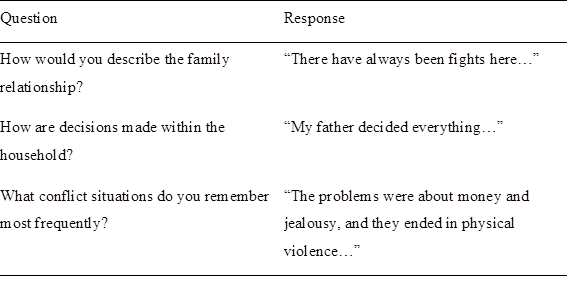
Five semi-structured interviews were conducted between June 10 and July 5, 2024, involving the parents and three adolescents within the family system. This technique made it possible to explore perceptions, experiences, and meanings associated with family violence, power relations, and living conditions. The interviews were conducted in safe environments, guaranteeing confidentiality and avoiding revictimization. An example of the questions used is presented below:
A family genogram (a graphic representation similar to a family tree, though more detailed) was developed as a diagnostic tool enabling the visual representation of the family structure, the relationships among its members, and the relational and intergenerational patterns present within the system. This instrument facilitated the identification of conflictive relationships, family roles, and power dynamics within the family system.
Structured direct observation was conducted through three home visits carried out on June 12, 20, and 28, 2024, at the family residence located in southern Guayaquil. This technique made it possible to assess housing conditions, daily family dynamics, interpersonal relationships, and the surrounding community environment, with the information systematically recorded in field notes.
Procedure and Data Analysis
The research was conducted between June 4 and July 15, 2024. The process included the following phases:
• Critical review of the judicial file and associated documents.
• Conducting semi-structured interviews.
• Development of the family genogram.
• Home visits and observation of the surrounding environment.
• Recording of field notes.
• Organization, analysis, and interpretation of the information.
• Preparation of the social report.
The names used in this study are pseudonyms intended to protect participants’ identities and guarantee the confidentiality of the information.
Data analysis was conducted through reflexive thematic analysis, understood as a qualitative method that allows the identification, analysis, and reporting of patterns within participants’ narratives (Braun & Clarke, 2021), complemented by content analysis (Flick, 2023). This approach enabled the identification of emerging categories related to:
• Family violence.
• Power relations.
• Social vulnerability.
• Psychoactive substance use.
• Educational exclusion.
• Economic precarity.
Source triangulation (interviews, observation, and document review) was applied to strengthen the validity of the study. Triangulation consists of the use of multiple sources of information in order to contrast and validate the study’s findings.
The interpretation was grounded in the bioecological model and in a gender perspective (Segato, 2016), allowing for a comprehensive analysis of the case.
Case Description
The case is situated within a professional Social Work intervention process linked to a family judicial context. The family system analyzed corresponds to a single-mother household characterized by dysfunctional parental relationships, composed of an adult mother approximately 38 years old, two adolescent sons (13 and 14 years old), one young adult daughter, and one older son (20 and 23 years old), all of whom share a history of coexistence marked by intrafamily conflict, parental separation, and prior dynamics of violence.
The male parent, approximately between 40 and 45 years old, lives separately with a wife and child and maintains an intermittent and conflictive relationship with the primary family system, particularly regarding parental co-responsibility and financial support.
The family group presents accumulated conditions of social and psychosocial vulnerability, including precarious employment, absence of significant support networks, limited access to educational and social resources, and exposure to community environments characterized by risks associated with violence and substance use.
Within this context, the children and adolescents in the family system are exposed to multiple risk factors affecting their integral development, educational trajectories, and emotional well-being, creating a scenario of high social complexity requiring interdisciplinary intervention.
Case Analysis
The case includes a history of sexual abuse against an adolescent within the family system, constituting a critical risk factor that directly impacts her emotional well-being, psychosocial development, and sense of safety. This form of violence requires specialized intervention, as well as the immediate activation of protective measures aimed at restoring rights.
Likewise, multiple social and psychosocial risk factors were identified, including the presence of historical and structural family violence, the absence of support networks, the use of controlled psychoactive substances by two of the three children, involvement with juvenile criminal groups, limitations in access to higher education, dropout from intermediate educational processes, low participation in extracurricular activities, lack of stable housing, overcrowding, and exposure to a conflictive community environment.
Power Relations
The family analysis reveals patterns of male domination and imbalance in parental roles, framed within a patriarchal system that reproduces inequalities (Segato, 2016). Both parents demonstrate difficulties in establishing assertive communication, agreements regarding co-parental responsibility, and emotional support toward their children.
Psychosocial Vulnerability
The family system is characterized by disorganization, unresolved emotional burdens, intergenerational trauma, and neglect of both basic and emotional needs. The critical developmental stage of adolescence experienced by the children, combined with economic precarity and the lack of institutional support, increases the risk of social exclusion and the perpetuation of violence.
Results
The findings of the study fulfill the general objective of the research, demonstrating that the analyzed family dynamics are shaped by multiple psychosocial risk factors. Among the most significant are the presence of historical and structural family violence, psychoactive substance use among family members, absence of support networks, and limitations in access to educational opportunities.
Likewise, conditions of vulnerability associated with structural factors such as economic precarity, housing instability, and exposure to violent community contexts were identified, significantly increasing the risk of negative impacts on the integral development of children and adolescents.
With regard to protective factors, only limited resources were identified, primarily linked to institutional intervention and the partial willingness of some family members to participate in support processes.
In this sense, the findings confirm the existence of a scenario of high psychosocial risk, in which the accumulation of adverse factors exceeds the family’s coping capacities, requiring comprehensive, sustained, and intersectoral interventions. Figure 1 presents a graphic representation of the family structure and dynamics, identifying biological ties, affective relationships, and interaction patterns. Green lines indicate functional or close relationships; red lines represent conflictive relationships; and dashed lines reflect weak or distant bonds. Patterns of intergenerational conflict and dysfunctional parental relationships are evident.
Figure 1.
Family genogram of the analyzed case.
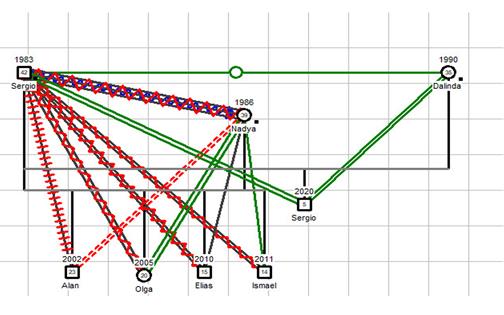
Note: Prepared by the author based on information collected through interviews and case analysis. Fictitious names have been used.
We have to understand the relationship between family violence and associated factors, distinguishing between risk dynamics (addictions and involvement with criminal groups) and vulnerability factors (economic precarity and the absence of support networks). These elements interact to generate patterns of violence and limitations affecting educational and social development. Furthermore, let us notice the articulation between the family and territorial context, the factors of risk and vulnerability, and the social and power dynamics involved, showing how these elements shape scenarios of family violence from both ecological and gender-based perspectives.
Level 1: Case and context (family + territory).
Level 2: Factors and dynamics (risk, vulnerability, protection, and power relations).
Level 3: Theoretical framework and objectives (Social Work, bioecological approach, and gender perspective).
Forensic Discussion of the Case and Conclusions
Nature of the Risk and Consistency with Contemporary Patterns: Severe physical violence against the mother, adolescent sexual abuse, substance use involving two of the children, death threats, involvement with organized criminal groups (OCGs), housing precarity, and the absence of support networks together constitute a situation of high psychosocial risk, consistent with the multicausal patterns documented in recent literature on family violence in vulnerable urban contexts (UNICEF, 2021a, b; UNICEF, 2024). In Ecuador, this situation is further aggravated by the escalation of community violence: in 2023, 770 homicides of children and adolescents were recorded, representing a 640% increase compared to 2019, in addition to temporary school closures affecting 4.3 million students (ACAPS, 2024; UNICEF, 2024).
The testimonies reveal indicators typically associated with chronic violence: severe physical aggression, death threats linked to organized criminal groups, suicide attempts, infidelity and abandonment, economic desperation, substance use, and sexual abuse accompanied by emotional consequences. These narratives are consistent with trauma patterns described in recent systematic reviews (Hoppen et al., 2024; Zhang et al., 2025). The use of semi-structured interviews and reflexive thematic analysis is particularly appropriate for capturing meanings and narratives in qualitative forensic studies (Braun & Clarke, 2022).
The male domination and asymmetry in parental roles evidenced in the case are consistent with Segato’s critical perspective (2016), which interprets violence as a language of patriarchal power sustained by mandates of masculinity and a pedagogy of cruelty. This framework makes it possible to understand both the normalization of violent practices and their intergenerational reproduction.
The educational difficulties observed -absenteeism, poor academic performance, and withdrawal from extracurricular activities- are consistent with recent studies documenting the relationship between domestic violence and academic achievement, mediated by depression and gender-related factors (Bârsan, 2024; Li et al., 2024).
UNICEF (2021a, b) recommends prevention strategies, access to comprehensive services for children and adolescents in contexts of violence, and intersectoral coordination. These guidelines support the urgent need for precautionary measures and comprehensive protection in cases such as the present one.
From a critical perspective, the findings of this study demonstrate that the persistence of risk conditions cannot be explained solely by dysfunctional family dynamics, but also by structural failures within social protection systems. The limited institutional response capacity, fragmentation of services, and weak intersectoral coordination reveal a significant gap between existing legal frameworks and their effective implementation.
Within this context, the sustained exposure of children and adolescents to situations of severe violence highlights the responsibility of the State and public policies in guaranteeing rights, particularly in territories characterized by inequality, community violence, and social exclusion.
From an applied perspective, the results suggest the need to strengthen intersectoral intervention mechanisms, ensure timely access to specialized mental health services, and consolidate sustained family support strategies. It is also essential to critically reassess the effectiveness of current institutional responses in order to prevent the reproduction of scenarios of structural neglect.
The case analysis makes it possible to establish that the family is experiencing a situation of high psychosocial risk resulting from the convergence of structural and relational factors, including severe family violence, alleged sexual abuse, problematic use of controlled psychoactive substances, threats associated with the presence of organized criminal groups, economic precarity, and the absence of effective support networks. These conditions unfold within an environment characterized by community violence and institutional limitations, thereby intensifying vulnerability.
The adolescents demonstrate prolonged exposure to traumatic situations during a particularly sensitive developmental stage (Ayala-Rodríguez & López-Cantero, 2021). The information gathered through interviews, observation, and document review suggests the presence of indicators compatible with complex trauma, consistent with national and international research concerning the emotional impact on children and adolescents exposed to chronic violence (UNICEF, 2023). Persistent deficits were also identified in parental functioning, particularly regarding supervision, emotional support, and the establishment of protective boundaries.
The observed family dynamics reproduce asymmetrical power relations and patriarchal gender mandates, facilitating the normalization of control, coercion, and violence, in line with contemporary theories on gender inequality (Segato, 2016). These dynamics manifest both within the domestic sphere and in the community environment, generating a cycle of violence reproduction that is difficult to interrupt without specialized intervention.
Finally, the triangulation of information demonstrates that the complexity of the case requires continuous, specialized, and intersectoral intervention coordinated across health, education, justice, and social protection systems. The magnitude of the identified risk exceeds the family’s capacity for containment, making coordinated actions necessary to guarantee the effective exercise of rights and the progressive restoration of a protective environment.
With regard to the stated objectives, these were fully achieved, making it possible to identify, analyze, and understand the dynamics of risk, vulnerability, and protection present within the family system, as well as to substantiate the need for comprehensive psychosocial interventions.
References
ACAPS. (December 11, 2024). La escalada y el impacto de la violencia en la protección, la educación y la salud de los niños en Esmeraldas y Guayas (Informe temático).
https://www.acaps.org/fileadmin/Data_Product/Additional_resources/20241210_ACAPS_Ecuador_The_escalation_and_impact_of_violence_on_children_Spanish.pdf
Ayala-Rodríguez, N. & López-Cantero, E. (Eds.). (2021). Semilleros: Contribuciones investigativas desde la psicología a las realidades sociales en Colombia. Editorial Universidad Católica de Colombia. https://doi. org/10.14718/9789585133884.2021
Barros, R. A. (2025). Violencia Familiar en América Latina: Una Revisión Sistemática sobre su Panorama y Factores de Riesgo. Revista Scientific, 10(E5), 123-141. https://doi.org/10.29394/Scientific.issn.2542-2987.2025.10.E5.6.123-141
Bârsan, M. G. (2024). Consequences of exposure to family violence on the academic success of children, adolescents, and young people. Scientific Annals of the “Alexandru Ioan Cuza” University, Iaşi. New Series Sociology and Social Work Section, 17(1), 95-105. https://doi.org/10.47743/asas-2024-1-756
Bourdieu, P. (2000). La dominación masculina. Anagrama. https://www.nomasviolenciacontramujeres.cl/wp-content/uploads/2015/09/Bondiu-Pierre-la-dominacion-masculina.pdf
Braun, V., & Clarke, V. (2021). Thematic analysis: A practical guide. SAGE.
Bronfenbrenner, U. (1979). The ecology of human development: Experiments by nature and design. Harvard University Press.
Corsi, J. y Peyru, G. (2003). Violencias sociales. Ariel.
Espinoza, J. J., & Alchundia, M. N. (2026). Impacto Psicológico de la Violencia Urbana en Habitantes del sur de la ciudad de Guayaquil. Revista Científica Multidisciplinar G-Nerando, 7(1), 2785-2806. https://doi.org/10.66473/rcmg.v7i1.1029
Flick, U. (2023). An introduction to qualitative research (7th ed.). SAGE.
Gélinas, J., Claing, A., Dugal, C., Savard, C., Daspe, M. È., Péloquin, K., & Brassard, A. (2025). Intergenerational transmission of childhood interpersonal trauma in adults entering therapy for intimate partner violence. Child Abuse & Neglect, 161, 107258. https://doi.org/10.1016/j.chiabu.2025.107258
Green, J., Thorogood, N., & Meléndez-Torres, G. J. (2025). Qualitative methods for health research (5th ed.). SAGE.
Hoppen, T. H., Wessarges, L., Jehn, M., Mutz, J., Kip, A., Schlechter, P., Meiser-Stedman, R., & Morina, N. (2024). Psychological interventions for pediatric PTSD: A systematic review and network meta-analysis. JAMA Psychiatry, 82(2), 130–141. https://doi.org/10.1001/jamapsychiatry.2024.3908
International Federation of Social Workers (IFSW). (August 1, 2020). Global Standards for Social Work Education and Training. IFSW. https://www.ifsw.org/global-standards-for-social-work-education-and-training/
Lagarde, M. (2005). Los cautiverios de las mujeres. UNAM.
Latzman, N. E., Casanueva, C., Brinton, J., & Forman-Hoffman, V. L. (2019). The promotion of well-being among children exposed to intimate partner violence: A systematic review of interventions. Campbell systematic reviews, 15(3), e1049. https://doi.org/10.1002/cl2.1049
Li, X., Long, J., Li, J., Chen, J., Sun, Y., Li, Y., & Yuan, Y. (2024). The relationship between exposure to violence and academic performance. Journal of Family Violence, 0, 1-13. https://doi.org/10.1007/s10896-024-00777-x
Murphy, M., Contreras-Urbina, M., Spearing, M., & Swaine, A. (2023). Socioecological Framework for Drivers of Conflict and Postconflict Violence Against Women and Girls. Violence Against Women, 29(2), 406-427. https://doi.org/10.1177/10778012221094065
Organización Mundial de la Salud (OMS). (2002). Informe mundial sobre la violencia y la salud. Sinopsis. OMS. https://iris.who.int/server/api/core/bitstreams/f050efba-691a-401b-8fe3-11201cab4ed7/content
Pereda, N., Águila, A. y Andreu, L. (2025). El maltrato y la exposición a violencia familiar. Un estudio nacional desde la perspectiva de la adolescencia española. UNICEF. https://www.unicef.es/sites/unicef.es/files/communication/maltrato-violencia-familiar-2025-unicef.pdf
Robles, C. O. (2021). La intervención pericial en Trabajo Social: orientaciones teórico-prácticas para la tarea forense. Universidad Nacional de La Matanza. http://repositoriocyt.unlam.edu.ar/handle/123456789/2142
Ruiz, P. (2013). El trabajador social en el ámbito forense. Colegio Oficial de Diplomados en Trabajo Social de Málaga.
Segato, R. L. (2016). La guerra contra las mujeres. Traficantes de Sueños.
Stake, R., & Visse, M. (2022). Case study research. In International Encyclopedia of Education: Fourth Edition (pp. 85-91). Elsevier. https://doi.org/10.1016/B978-0-12-818630-5.11010-3
Tong, P., & An, I. S. (2024). Review of studies applying Bronfenbrenner's bioecological theory in international and intercultural education research. Frontiers in psychology, 14, 1233925. https://doi.org/10.3389/fpsyg.2023.1233925
UNDP, UNODC and OHCHR. (2026). Global Progress Report on Sustainable Development Goal 16: Indicators on Peaceful, Just and Inclusive Societies. Latin America and the Caribbean. Regional Snapshot Series, number 1. UNDP, UNODC and OHCHR. https://www.undp.org/sites/g/files/zskgke326/files/2026-02/undp-ohchr-unodc-global-progress-report-sdg16-lac.pdf
UNICEF. (2021a). Guía con herramientas. Modelo de atención psicosocial remota para las niñas y las adolescentes refugiadas y migrantes sobrevivientes de violencia basada en género. Promoviendo y protegiendo sus derechos. UNICEF. https://www.unicef.org/lac/media/28406/file/Guia-con-herramientas-del-modelo-de-atencion-psicosocial-remota.pdf
UNICEF. (2021b). Modelo de atención psicosocial remota para las niñas y las adolescentes refugiadas y migrantes sobrevivientes de violencia basada en género. Promoviendo y protegiendo sus derechos. UNICEF. https://www.unicef.org/lac/media/21961/file/Modelo-de-atencion-remota.pdf
UNICEF. (2023). La situación de la infancia en Ecuador. Principales datos sobre los niños, niñas y adolescentes en el país. UNICEF. https://www.unicef.org/ecuador/informes/la-situaci%C3%B3n-de-la-infancia-en-ecuador
UNICEF. (January 16, 2024). En Ecuador, la tasa de homicidios de niños, niñas y adolescentes aumenta en un 640% en cuatro años. UNICEF. https://www.unicef.org/es/comunicados-prensa/ecuador-tasa-homicidios-ninos-adolescentes-aumenta-cuatro-anos
Yin, R. K. (2017). Case study research and applications (6th ed.). SAGE.
Zhang, Y., Cannata, S., Razza, R. & Liu, Q. (2025). Intimate Partner Violence Exposure and Self-Regulation in Children and Adolescents: A Systematic Review. Journal of Family Violence, 40, 401-417. https://doi.org/10.1007/s10896-023-00636-1